From Idea to MVP SaaS in a Blink: A Tech Wizard's Guide to Rapid Low-Code
written by Alec Sherman | Published: January 5, 2026
Another genius SaaS idea sketched on a napkin, destined to become a sprawling mess of technical debt before it ever sees a paying customer. Sound familiar? You've got the vision, the business plan, and maybe even a waitlist. But between you and that glorious recurring revenue is a chasm filled with database schemas, authentication boilerplate, and endless front-end frameworks. The industry's answer? A chorus of evangelists singing the praises of "no-code," promising you can build an enterprise-grade application by dragging and dropping a few boxes. I've been a CTO long enough to tell you that's a fantasy, and a dangerous one at that.
The dirty secret of the no-code revolution is that it often builds fragile, unscalable products trapped in a vendor's ecosystem. The moment you need custom logic, a specific integration, or full control over your data for compliance, you hit a wall. That's when the frantic, expensive search for a "real" development team begins. This isn't about avoiding code; it's about avoiding *wasted* code. It's about focusing your engineering talent on the unique business logic that makes you money, not on reinventing the user login system for the hundredth time. This is the pragmatic promise of true rapid application development.
The MVP Mirage: Why 'Fast' Usually Means 'Fragile'
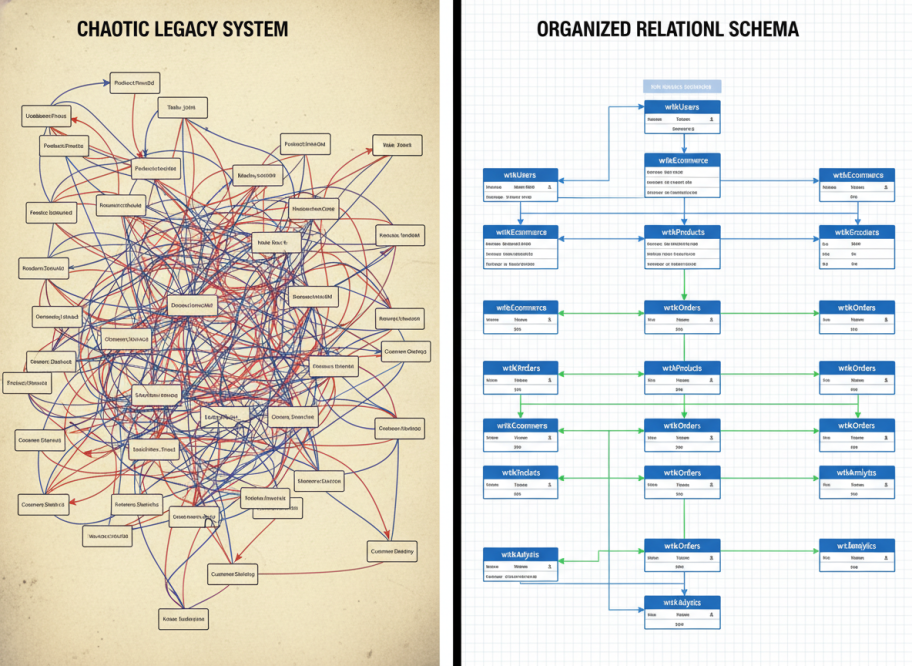
I've seen more 'game-changing' MVPs built on flashy platforms implode under the weight of their first 100 users than I've had lukewarm cups of coffee. And I drink a lot of coffee. The rush to get a product to market often leads to catastrophic architectural compromises. You launch fast, yes, but you've built your house on sand.
These platforms sell a dream of speed but deliver a reality of constraints:
- Vendor Lock-In: Your application, your data, your entire business logic lives on their servers, by their rules. Migrating off the platform is often a complete, ground-up rewrite. You don't own your code; you're merely renting it.
- Scalability Nightmares: That drag-and-drop interface is great for five users. When you need to handle thousands of concurrent requests or complex database queries, the black box starts to creak, groan, and eventually fall over. You have no control over performance tuning.
- The Customization Cliff: The moment your feature request isn't on their pre-approved roadmap, you're stuck. Need a specific API integration? Want to implement a unique security protocol? Good luck. You're at the mercy of their development cycle.
True speed isn't about skipping the engineering; it's about accelerating it with better tools. It's about starting with an enterprise-grade foundation that doesn't sacrifice scalability or ownership for a slick UI.
The Bedrock: Nailing the Database and Backend First
Let's get one thing straight: your application is its data. The user interface is just a pretty face, a temporary window into the real work happening in your database and backend. If your data architecture is a mess, you're not building a business; you're building a very expensive, slow-ticking time bomb. This is where most projects go wrong. They obsess over pixels while ignoring the plumbing.
A proper low-code framework understands this. It doesn't hide the database from you; it gives you a head start with a production-ready one. For instance, in Wizard's Toolkit, you're not starting with a blank slate. You're starting with a complete, optimized database ecosystem. Think of it as the pre-poured concrete foundation for your skyscraper. We're talking over 30 pre-configured tables covering the essentials every SaaS needs:
- User Management: `wtkUsers`, `wtkUserHistory`, `wtkLoginLog`
- E-commerce & Billing: `wtkEcommerce`, `wtkRevenue`, `wtkInboundLog`
- Analytics & Reporting: `wtkReports`, `wtkVisitors`, `wtkVisitorHistory`
- Content & Comms: `wtkBlog`, `wtkChat`, `wtkFiles`
This approach immediately eliminates what our data shows is 40% of the time traditionally spent on infrastructural code. You're not debating normalization forms or designing a user roles table. You're inheriting a system that's been battle-tested and refined for over two decades. You get full ownership, full server control, and the ability to modify every single table to fit your exact business needs. That's the difference between a tool and a toy.
Low-Code PHP and Rapid Application Development Dashboards
With a solid database foundation, you can turn your attention to the backend logic. This is where a framework built on a robust language like modern PHP 8.2+ shines. 'Low-code' in this context isn't about visual scripting puzzles. It’s about code generation that handles the repetitive, error-prone tasks, freeing you to write the code that matters.
Imagine building a new admin page to manage customer data. The traditional path involves manually writing the HTML form, the PHP processing logic, the SQL queries for create, read, update, and delete (CRUD) operations, and all the validation in between. It's tedious and takes days.
With a tool like the Wizard's Toolkit Page Builder, the process is brutally efficient:
- You open the admin panel and navigate to the builder.
- You point it at the `wtkUsers` database table (or any custom table you've made).
- You define a few parameters, like which fields to display.
- You click 'Generate'.
The system writes the production-ready PHP files for you. It’s not a black box; it's clean, maintainable code that you own and can extend. You’ve just compressed a week of work into about five minutes. Now you can spend your time implementing the *actual* business logic—the custom validation, the integration with a third-party service, the unique feature that your customers will pay for.

From 6 Weeks to 5 Days: A Realistic Timeline
Let's make this tangible. Consider building a core feature: a dashboard for clients to view their monthly usage reports. A simple request that can easily bloat into a multi-month project.
The Traditional Development Cycle (4-6 Weeks):
- Week 1-2: Architect and build the necessary database tables. Set up the user authentication and permissions system to ensure clients only see their own data.
- Week 3-4: Write the backend PHP code to query the database, process the data, and create secure API endpoints.
- Week 5-6: Build the front-end interface. Write JavaScript to fetch data from the API, use a charting library to create visualizations, and style the dashboards. Debugging across the full stack.
The Wizard’s Toolkit Low-Code Approach (1 Day):
- Starting With: The `wtkUsers`, `wtkWidgetGroup`, `wtkWidget` and `wtkWidgetGroup_X_Widget` database tables are already built. The enterprise-grade authentication system is already running. In the provided Back Office you already have working DevOps and Marketing Dashboards as an example.
- Hour 1: Review the example Dashboard code in the /demo/widgetDashboards.php page. Copy and paste a few lines into the page you want to display your Dashboard.
- Hour 2 to 6: In the WTK Back Office define your Widget Group. Then define Widgets and write the custom SQL queries to display the specific data points and KPIs you need. This is where you focus your core development effort.
- Hour 7: In the WTK Back Office assign the widgets to your Widget Group. Drag the widgets into the priority you want them displayed on the dashboard. Test and deploy.
- In the future when the CEO, CFO or COO want a new KPI on their dashboard, you simply go into the WTK Back Office, write a little SQL for the needed Widget, assign it to the Widget Group and move it where you want.
We’re not talking about a 10% improvement. We consistently see a 10x acceleration in development speed. This isn’t magic; it’s just the result of eliminating thousands of lines of boilerplate code and starting with a foundation that's already 80% of the way there.
The CTO’s Takeaway
Stop chasing the no-code fantasy. The path from idea to a scalable, profitable SaaS MVP isn't about writing *no* code; it's about writing *less* of the code that doesn't differentiate your business. Your goal is not to escape code but to escape the soul-crushing, repetitive, infrastructural work that kills projects and drains budgets.
Here’s the bottom line:
- Own Your Foundation: Never build a core business asset on a platform you don't control. A proper low-code framework gives you full code ownership and database access.
- Start with the Database: A solid, pre-configured database schema is the single greatest accelerator for data-centric applications.
- Automate the Boilerplate: Use code generation for the boring stuff like CRUD pages and authentication so you can focus on unique business logic.
- Build Dashboards Last, and Fast: With a solid backend, assembling user-facing dashboards with modular components becomes the easiest part of the project, not the hardest.
Build on a solid foundation, and you might actually ship something that works and is ready to scale from day one. A novel concept, I know.

About Alec Sherman
Chief Technology Wizard - Alec has spent over a decade as a CTO, helping companies from the USA to Dubai modernize their technology. He built his first database at 14 and now focuses on implementing AI solutions.
Full Bio → | LinkedIn | GitHub