Your MVP Looks Terrible, and It’s Costing You a Fortune
written by Alec Sherman | Published: January 30, 2026
Let’s be honest. You’ve spent weeks, maybe months, architecting a brilliant backend, optimizing database queries, and ensuring your business logic is flawless. Your enterprise MVP is a technical marvel under the hood. On the surface, however, it’s a graveyard of grey boxes, Lorem Ipsum, and that one stock photo of suspiciously happy people in a meeting that you’ve used for the last three projects. The design bottleneck is real, and it’s slowing you down.
Every day you spend waiting for a designer, haggling over asset budgets, or scouring stock photo sites is a day you’re not validating your product with actual users. This isn't just an aesthetic problem; it's a fundamental drag on your development velocity. You tell yourself they’re just placeholders, but you know the truth. Temporary solutions have a nasty habit of becoming permanent technical debt. Now, there’s a tool that can break this cycle: AI image generation. But before you roll your eyes at another AI hype train, let's talk about how to use it like an engineer, not a marketer.

The Old Way: A Painful Trip to the Stock Photo Store
Remember the traditional asset workflow? It’s a masterclass in inefficiency. First, you write a detailed brief for a designer, who is inevitably juggling five other “urgent” projects. You have three rounds of feedback meetings to explain that, no, you don’t want something “blue and corporate,” you need a visual representation of asynchronous data processing. The designer nods, then sends you something blue and corporate.
Frustrated, you turn to stock photo libraries. You spend hours sifting through thousands of generic, soulless images, only to find the perfect one costs $500 for a license. You settle for a cheaper, less-ideal option. You repeat this process for every icon, banner, and user avatar. Your MVP’s launch is delayed by weeks, and your budget is depleted before you’ve even written a line of production-ready frontend code. This is the friction that kills promising enterprise projects.
AI Image Generation for Enterprise MVP Development: Your On-Demand Art Department
AI image generation platforms are more than just a fun toy for creating pictures of astronauts riding horses. For a developer, they are a powerful utility. Think of them as a command-line tool for visuals. Instead of writing code to produce a functional output, you write a natural language prompt to produce a visual one. This fundamentally changes the dynamic of rapid prototyping.
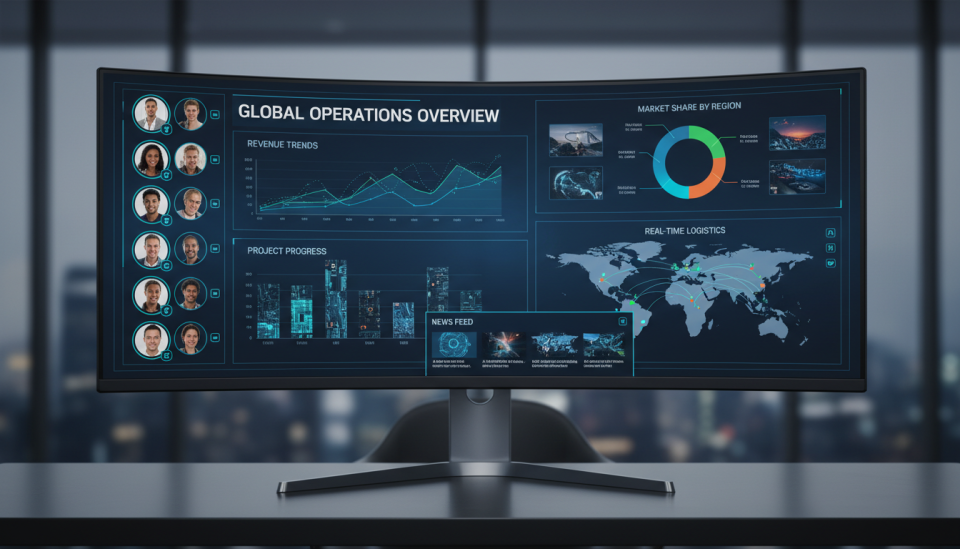
You no longer need to translate technical requirements into vague design language. You can now generate high-quality, contextually relevant images in seconds. Need a hero image for a financial analytics dashboard? Done. Need custom icons for a logistics management system? A few prompts later, you have a full set. This isn't about replacing designers; it's about empowering developers to move faster and build a more polished, visually coherent MVP from day one.
A Practical Workflow for AI-Powered Prototyping
Integrating AI-generated assets isn't just about downloading a PNG and dropping it into a folder. To do it right, you need a systematic approach that plugs directly into your development process. This is where a robust low-code framework becomes indispensable.
- Step 1: Build Your Foundation First. Before you even think about visuals, you need a functional application. This is where a framework like Wizard's Toolkit saves you from reinventing the wheel. You’re not wasting 40% of your time on infrastructural code like user authentication or database schemas. You use the Page Builder to generate your core CRUD (Create, Read, Update, Delete) interfaces in minutes, giving you a working skeleton of your app.
- Step 2: Identify Visual Needs as You Build. As you flesh out a feature—say, a blog or a product listing—you’ll see the obvious gaps where images are needed. Instead of creating a ticket and waiting, you move to the next step immediately.
- Step 3: Engineer Your Prompts. This is the crucial skill. Don't ask for “a business meeting.” Be specific and technical. For example: “Photorealistic image of a data scientist analyzing complex financial charts on a holographic display in a modern, minimalist office. The mood is focused and professional. Use a color palette of deep blues, greys, and a single accent color of orange.” The more precise your prompt, the better your output.
- Step 4: Integrate and Manage Assets Systematically. Here’s where a true framework shines. You’re not just saving files to your desktop. With Wizard's Toolkit, you can upload your generated images directly into the pre-built
wtkFilesdatabase table. This means your assets are versioned, managed, and tied directly to the relevant parts of your application. Your MVP now has a scalable, organized asset management system from its inception, something no-code platforms can only dream of.
Beyond Placeholders: Production-Ready Visuals
The initial reaction to using AI images is that they’re only good for mockups. That might have been true a year ago, but the technology has advanced exponentially. The quality is now often indistinguishable from professional photography or illustration, provided your prompts are well-crafted. You can even feed the AI your brand’s color palette and stylistic guidelines to ensure consistency across all generated assets.
Suddenly, the images in your MVP aren’t just placeholders; they are legitimate, production-ready assets. This has a profound impact. Your early users and stakeholders see a polished, professional product, not a wireframe. This builds confidence and leads to far more valuable feedback, accelerating your path to product-market fit.
A Healthy Dose of CTO Cynicism
Of course, it's not a magic wand. As with any powerful tool, there are pitfalls you need to watch out for in your PHP development lifecycle.
- Garbage In, Garbage Out: Lazy, one-word prompts will give you generic, often bizarre results. Prompt engineering is a skill you must develop.
- The Uncanny Valley is Real: AI still struggles with details like human hands, complex text, and perfect brand logos. A human eye for review and occasional touch-ups is non-negotiable.
- The Legal Landscape is… Evolving: The world of copyright for AI-generated art is still the Wild West. Use services that provide clear commercial licenses for their output to protect yourself.
- It Augments, It Doesn't Replace: This tool is for accelerating the 90% of visual assets an MVP needs. For your final corporate logo or a mission-critical branding campaign, you still need the expertise of a professional human designer. The goal here is speed and efficiency for MVP development, not cutting creative professionals out of the loop entirely.
Conclusion: Stop Wasting Time and Start Building
The core challenge of building an enterprise MVP is speed—the speed at which you can turn an idea into a functional product to test in the real world. Traditional asset creation is a major speed bump. AI image generation, when used correctly, effectively paves over that bump.
By pairing this new technology with a powerful low-code framework like Wizard's Toolkit, you create a development environment built for extreme velocity. The framework handles the tedious backend and infrastructure, while AI handles the visual assets. This frees you up to focus entirely on the one thing that matters: your core business logic. You’re no longer a project manager coordinating between designers and stakeholders; you’re an engineer, building and shipping at 10x the traditional pace. And in the world of enterprise software, that pace is the only competitive advantage that truly matters.

About Alec Sherman
Chief Technology Wizard - Alec has spent over a decade as a CTO, helping companies from the USA to Dubai modernize their technology. He built his first database at 14 and now focuses on implementing AI solutions.
Full Bio → | LinkedIn | GitHub